Project note
HAL 9000 Voice Layer
A personal, non-commercial experiment in giving Codex a HAL 9000-inspired voice and on-screen presence. I wanted to explore whether HAL's restrained delivery suits brief agent updates.
Context
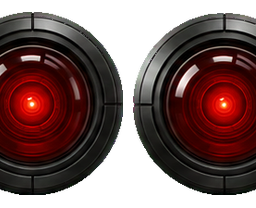
As AI agents become more useful, I think conversation will increasingly happen out loud as well as on screen. I wanted to explore a HAL 9000-inspired voice I know from 2001: A Space Odyssey, whose restrained delivery feels right for brief agent updates. This remains a personal, non-commercial project, not an attempt to commercialize a protected character or voice.
Approach
I began with a collection of cleaned-up HAL audio samples published on GitHub. To test whether the voice could handle new phrases, I used Resemble AI to make a quick custom voice, then used it to generate nearly a hundred prerecorded WAV responses for simple questions and common forms of feedback. After downloading the files, I used Codex to help name them consistently, group them by the situations they fit, and create a small lookup catalog for selecting them later.
What happened
The project now has a practical library of short response recordings and a way to describe when each one belongs. It is not running in Codex at the moment, so this is a foundation rather than a finished voice layer. The most recent development was a different kind of presence: with Codex's help, I made HAL into a small animated Codex pet that lives on my computer.
Working with AI
Codex was useful as an organizing partner after the recordings existed. It helped turn a loose folder of WAV files into a named, searchable set of responses and clarified the basic situations in which they could be used. It also helped build the animated pet. The direction, source material, and decision to keep the work personal all came from me.
Key details
- Nearly a hundred prerecorded WAV files cover simple questions and generalized feedback.
- The recording catalog pairs each file with the situations where it is likely to be useful.
- The animated pet is the current visible expression of the work; the voice layer is the next integration goal.
Tools and method
The first pass used cleaned audio samples, Resemble AI for the custom-phrase recordings, WAV files for the reusable response library, and a small metadata catalog to connect recordings with likely uses. Codex supported the naming, organization, and pet implementation. The intended next layer is local playback that can work across Codex projects.
Lessons learned
A recognizable voice is more than a model that can generate sound. It needs a useful vocabulary, a clear sense of timing, and enough organization that the response does not feel random. Starting with a limited set of deliberately made recordings makes those decisions visible while the project is still taking shape.
Limitations
This is a personal, non-commercial experiment based on protected source material; it is not a product, service, or voice offering. The voice layer is currently inactive, and the Codex pet cannot yet use the custom recordings as its voice. The library also only covers the situations I anticipated when I made it, so it will need to grow as the broader workflow develops.
Next step
Bring the local voice layer back into use across Codex projects, then expand the recording catalog only where real use shows a gap. If OpenAI makes the capability available, I would also like the pet to speak with this same personal HAL voice rather than one of the current built-in voices.